


Views: 7 Author: Kell Publish Time: 2025-12-17 Origin: Site


Product Adaptation and Style Design of Wooden Packaging Boxes: A Systematic Analysis from a Professional Perspective
I. The Professional Value and Market Positioning of Wooden Packaging Boxes
As a high-end packaging solution, wooden packaging boxes occupy an irreplaceable professional position in the packaging field due to their unique material properties. From a professional perspective, their core value is primarily manifested in three aspects:
Advantages of Material Properties: Solid wood materials possess natural cushioning properties; their fibrous structure can effectively absorb external impacts, providing superior physical protection for precision products compared to paper-based products. The density, hardness, and grain structure of different woods directly affect their protective performance. For example, the dense structure of walnut wood is suitable for high-value fragile items, while the lightweight characteristics of pine wood are more appropriate for packaging larger products.
Brand Value Transmission: The natural texture and craftsmanship details of wooden packaging can significantly enhance the perceived value of a product. Research indicates that using wooden packaging can increase consumers' perception of product quality by over 40%. This "packaging value-added effect" is particularly pronounced in the luxury goods, high-tech product, and premium consumer goods sectors.
Sustainability Certification: The use of FSC-certified wood ensures that wooden packaging complies with modern environmental standards. Its reusability and life cycle advantages make it an important component of corporate sustainability strategies within the ESG framework.
II. Product Adaptation: Professional Matching Based on Industry Characteristics
1. High-End Alcoholic Beverage Packaging
Professional Requirements: Constant temperature and humidity maintenance, shock and pressure resistance, support for long-term aging.
Adapted Styles: Pine wood boxes with mortise-and-tenon joinery, featuring built-in humidity-stabilizing layers (often using cedar veneers) and customized linings of velvet or sponge.
Technical Parameters: Wood moisture content strictly controlled between 8%-12%; inner wall thickness not less than 5mm; food-grade sealant used at joints.
Industry Case: Single malt whisky brands commonly adopt a design of double-layer oak outer casing + individual bottle slots, maintaining tradition while ensuring transport safety.
2. Precision Instruments and Electronics
Professional Requirements: Electrostatic discharge (ESD) protection, moisture and dust proofing, precise securing.
Adapted Styles: Walnut boxes with magnetic closure, lined with anti-static velvet and equipped with custom-molded EVA foam inserts.
EMI/RFI Shielding Design: Some high-end audio equipment packaging uses copper foil laminated wood boards to provide electromagnetic shielding functionality.
Apple Inc. Patent Design: The oak packaging box for its limited-edition products employs a "suspended" internal structure, utilizing a precise spring system to reduce transport shocks.
3. Luxury Goods and Jewelry
Professional Requirements: Aesthetic presentation, security and theft prevention, tactile experience.
Adapted Styles: Piano hinge opening design equipped with hydraulic support systems, interior using Italian ultra-fine velvet in layered structures.
Security Features: Hidden magnetic clasps, integrated miniature locks, non-slip silicone pads on the base.
Industry Standard: The jewelry industry commonly uses cherry wood with a density of 0.65-0.75 g/cm³; its warm hue enhances the visual appeal of gemstones.
4. Premium Tea and Food Products
Professional Requirements: Odor isolation, humidity control, food safety.
Adapted Styles: Drawer-style cedar wood boxes employing Japanese finger joint technique, glue-free design ensuring zero contamination.
Activated Carbon Filter Layer: Some top-tier tea caddies incorporate bamboo charcoal granules within the interlayer to regulate the internal microclimate.
Professional Certification: Wooden packaging in direct contact with food must comply with FDA or EU EU10/2011 standards.
III. Style Design: Professional Classification of Structures and Techniques
1. Structural Classification and Mechanical Properties
Flip-top Structure
Mechanical Characteristics: Even weight distribution, smooth opening/closing experience.
Hinge Selection: Piano hinge (high durability, suitable for heavy products); leather hinge (traditional craft, high aesthetic value).
Application Scenarios: Products requiring a sense of ceremony, such as watches, pens, medals.
Drawer-style Structure
Mechanical Characteristics: Sliding friction coefficient needs to be controlled between 0.2-0.3.
Rail Design: Concealed metal rails (load-bearing over 5kg); wooden rails (traditional craft, require regular beeswax maintenance).
Professional Application: Vertical storage of wine, humidity maintenance for cigars.
Layered/Tiered Structure
Space Efficiency: Increases capacity by 40%-200% compared to single-layer designs.
Connection Methods: Brass pillar connection (high stability); silk ribbon connection (traditional Chinese design).
Medical Device Application: Layered packaging for surgical instruments, with each tier sterilizable independently.
2. Professional Analysis of Surface Finishes
Open-pore Finish (Transparent Coating)
Technical Parameters: Coating film thickness 0.1-0.15mm, wood grain visibility over 85%.
Professional Tools: Danish Brida ultra-fine sandpaper (800-2000 grit), German Livos plant-based coatings.
Suitable Woods: Species with distinctive grain, such as oak, walnut.
Closed-pore Piano Lacquer Finish
Technical Process: 8-12 coating application steps, mirror gloss level ≥95 GU.
Environmental Requirements: Dust-free workshop, temperature 23±2°C, humidity 50%±5%.
Luxury Standard: Hermès wooden box lacquer finish thickness reaches 0.3mm, capable of passing 50-hour salt spray tests.
Traditional Lacquerware (Urushi) Technique
Material Cost: Raw lacquer material and labor costs are 5-8 times higher than chemical paints.
Technical Cycle: Complete process requires 25-30 days, including 16 steps such as cloth backing, ash filling, lacquer application, and polishing.
Cultural Heritage: Recognized as an item of National Intangible Cultural Heritage.
3. Internal Structure Design Parameters
Fixed Lining/Insert
Material Density: EVA foam density 40-60 kg/m³, memory foam density 70-90 kg/m³.
Mold Precision: CNC cutting tolerance ±0.2mm, laser cutting tolerance ±0.1mm.
Shock Absorption Calculation: Lining thickness calculated based on product weight and fragility using the formula: T=(W×G)/(S×C), where G is the multiple of gravitational acceleration.
Movable Partitions
Adjustment Mechanism: Silicone strip embedded slots, hook-and-loop (Velcro) grid systems.
Modular Design: Reconfigurable partition systems to accommodate different product sizes.
Hybrid Material Application
Technology Integration: 3D-printed PLA liner frames wrapped in natural silk.
Smart Integration: Embedded NFC chips, humidity sensor displays.
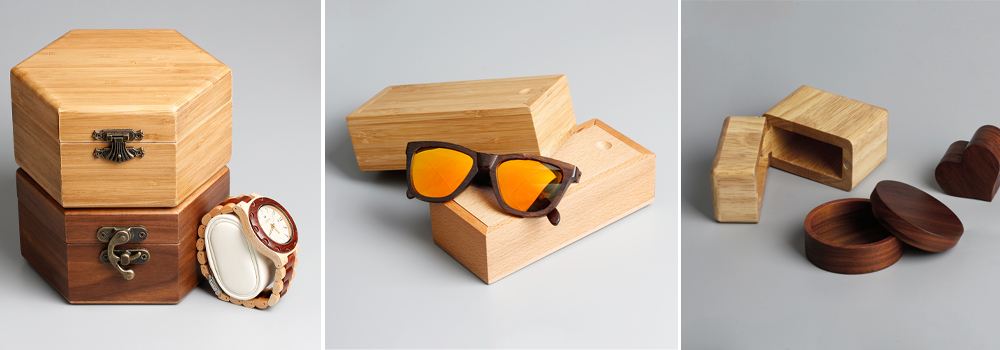
The professional selection of wooden packaging boxes is a comprehensive discipline combining materials science, structural mechanics, and brand psychology. Driven by both consumption upgrades and sustainable development, their professional value is evolving from an "exclusive feature of luxury goods" towards a "standard configuration for high-end products." Correct product adaptation and style design not only provide physical protection but also build emotional connections between brands and users, achieving dual enhancement of functional value and emotional value.
For enterprises, investing in professional wooden packaging solutions is essentially an investment in optimizing the product lifecycle experience and the long-term accumulation of brand equity. The professionalism embodied in the details will ultimately become a crucial component of the brand's moat.

